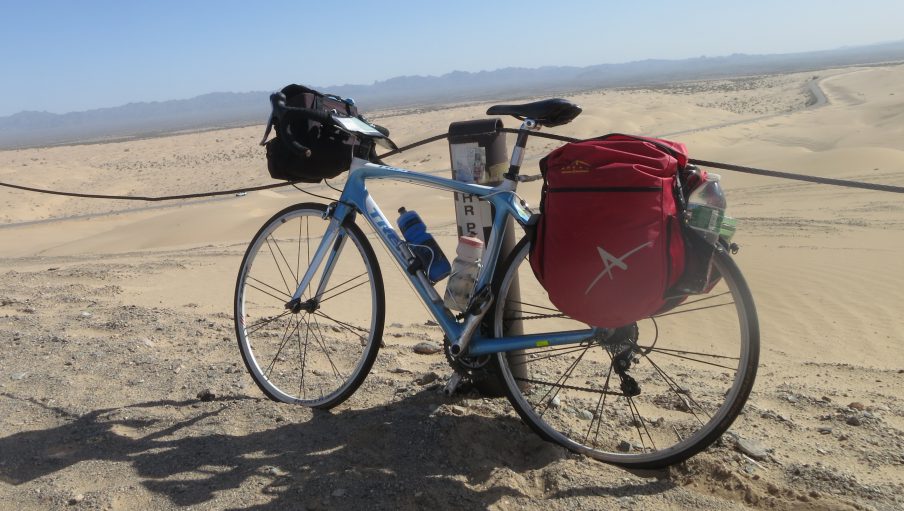
We have a new approach to heat now: leave as early as we can. Duh. It’s wonderful biking until about noon, and then I start worrying about Mark. His diligent biking training didn’t help him with the heat. My diligent absence of biking didn’t much matter, but I think I am helped in the heat by my habit of going to a very hot yoga class once a week. 95 degrees doesn’t seem that bad to me.
I had planned a couple of very easy days after our 88 mile ride. A very good thing.
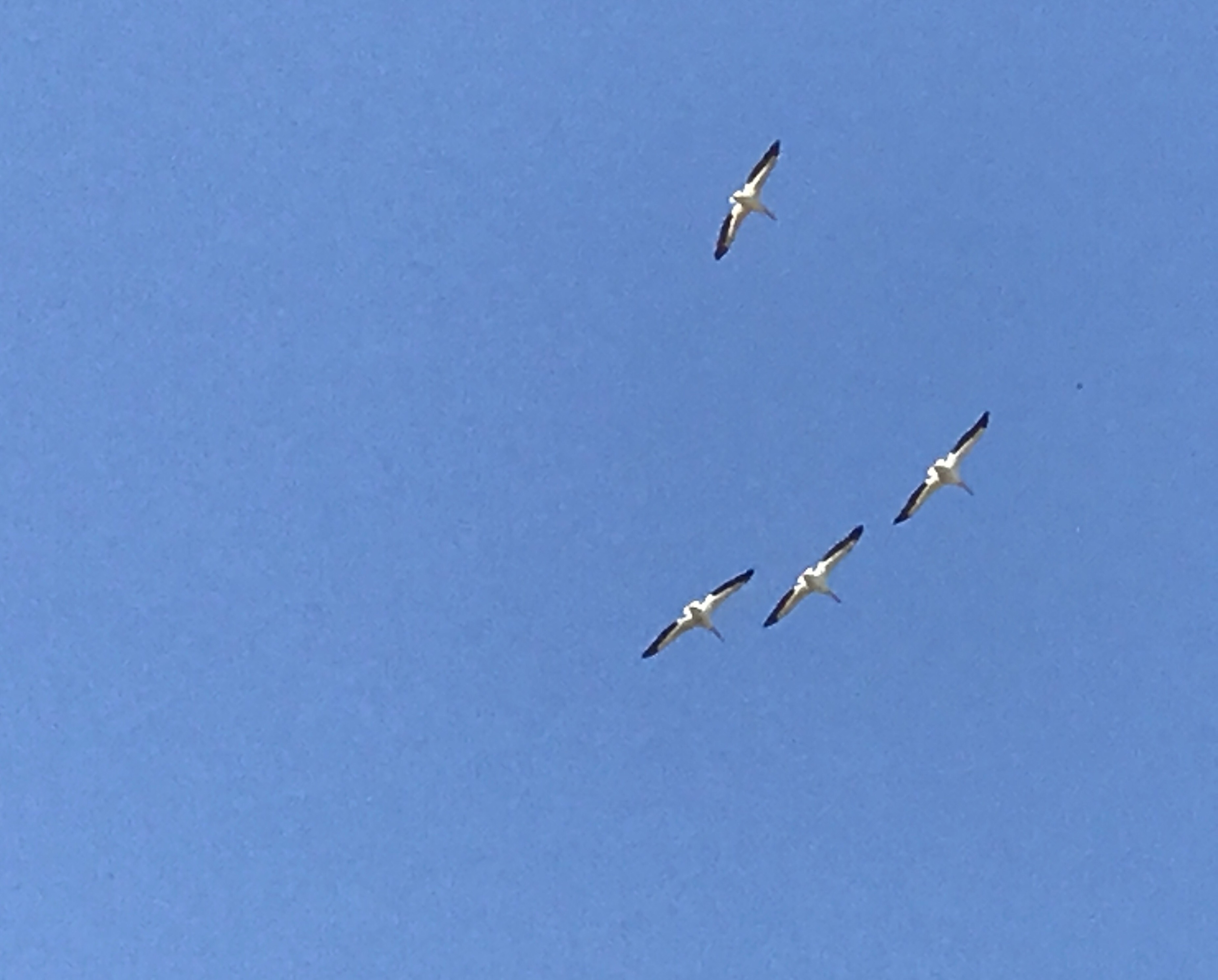
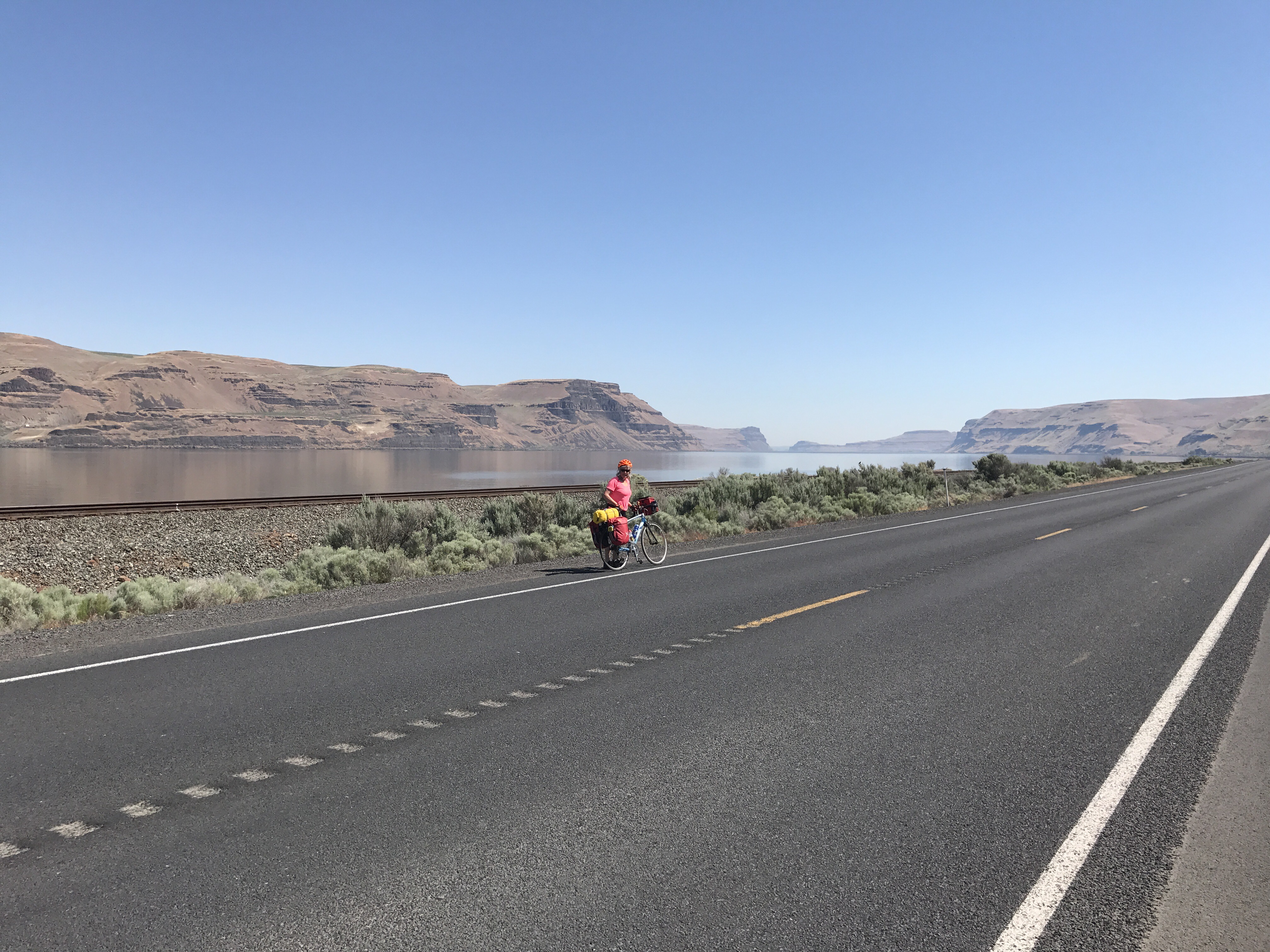
Our last miles along the Columbia River had grandeur and calm enough to let me figure out a couple of things. First, those solemn white birds in and over the river are pelicans.
Next, we am not dreaming, those are onions all along the side of the road.
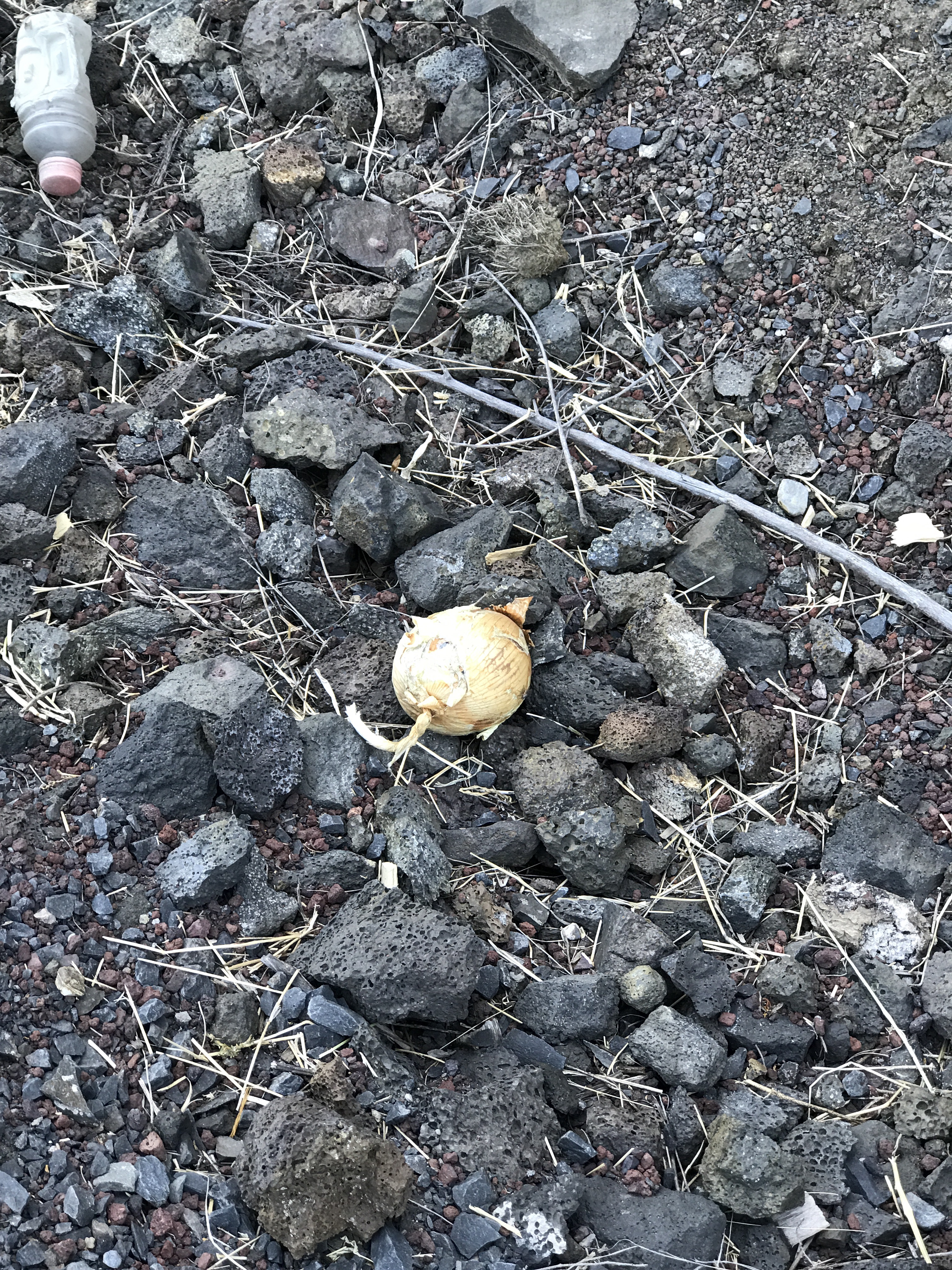
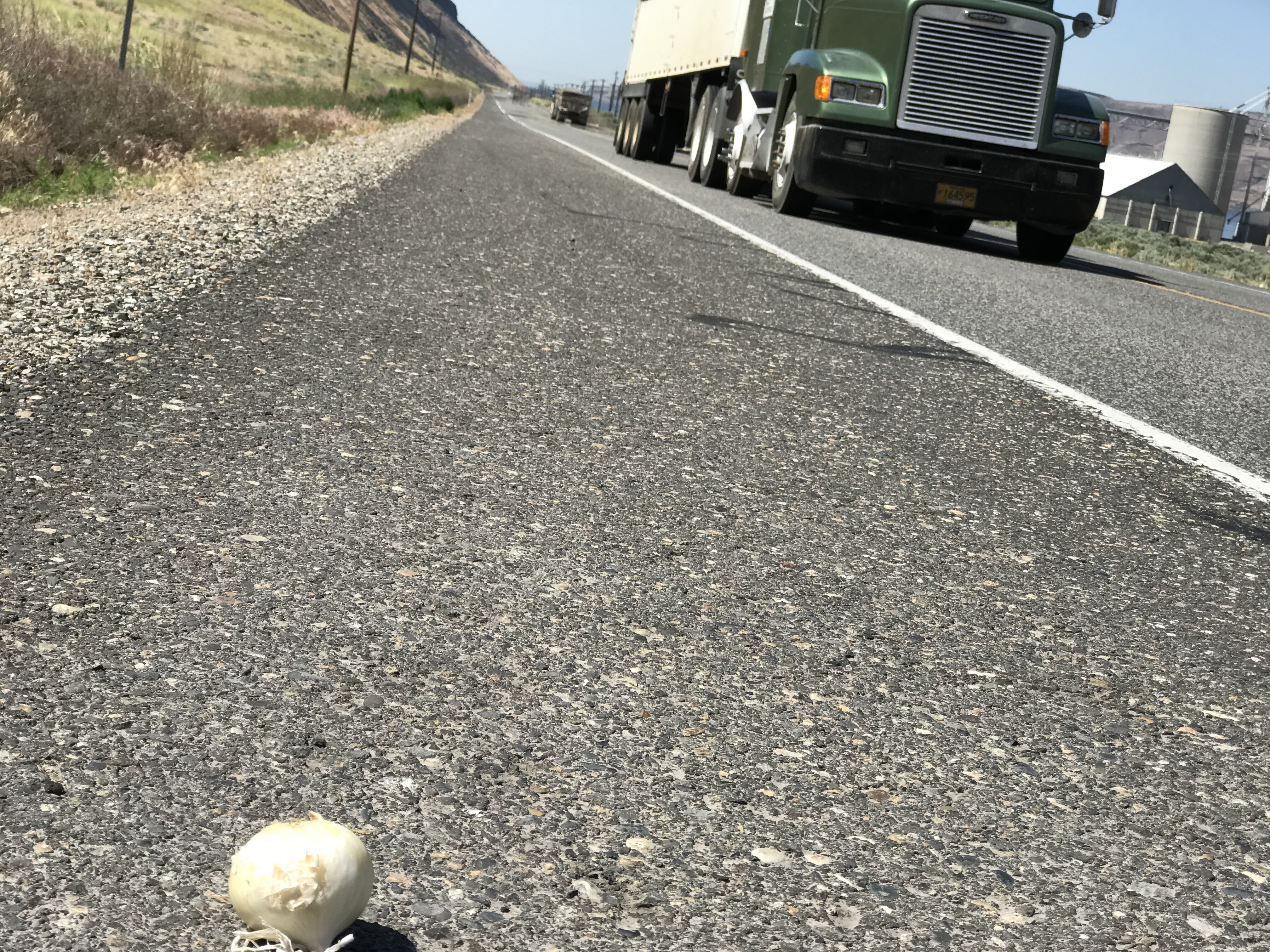
Plenty of onions for a nice soup. It was puzzling, but then fragrant trucks full of onions went by, in both directions.
We had few more miles to contemplate how expansive the landscape is, and how little of this river and its banks have been left to wild creatures and natural processes. There are train tracks and highways right next to the river on both sides, and dams every 20 miles or so. A municipal beach was the first access point allowing us to touch the water since way back before Portland.
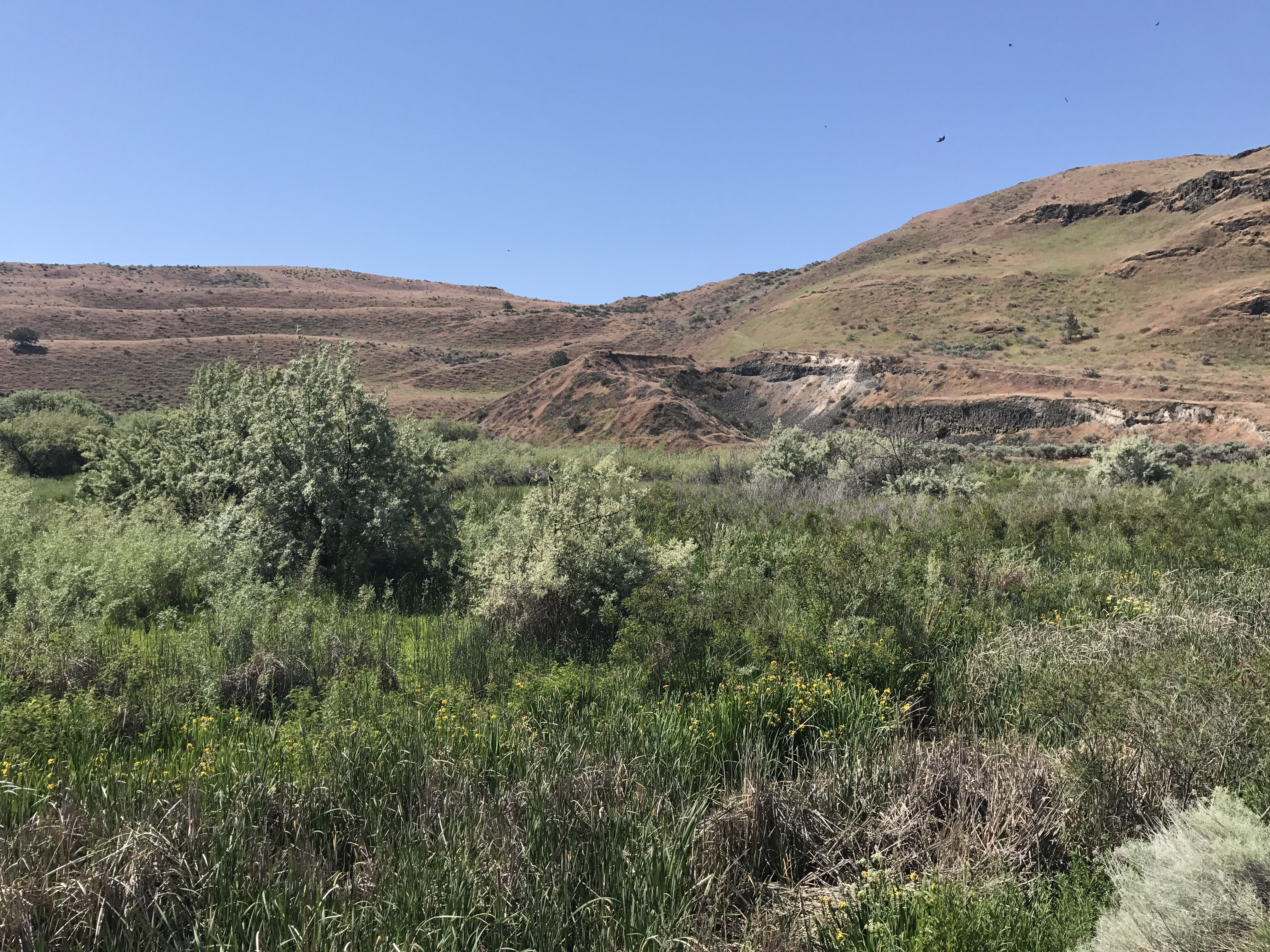
But leave a patch of damp ground alone and call it a wildlife refuge, and suddenly the land bustles with birds, flowers, and certainly a host of creatures I can’t see.
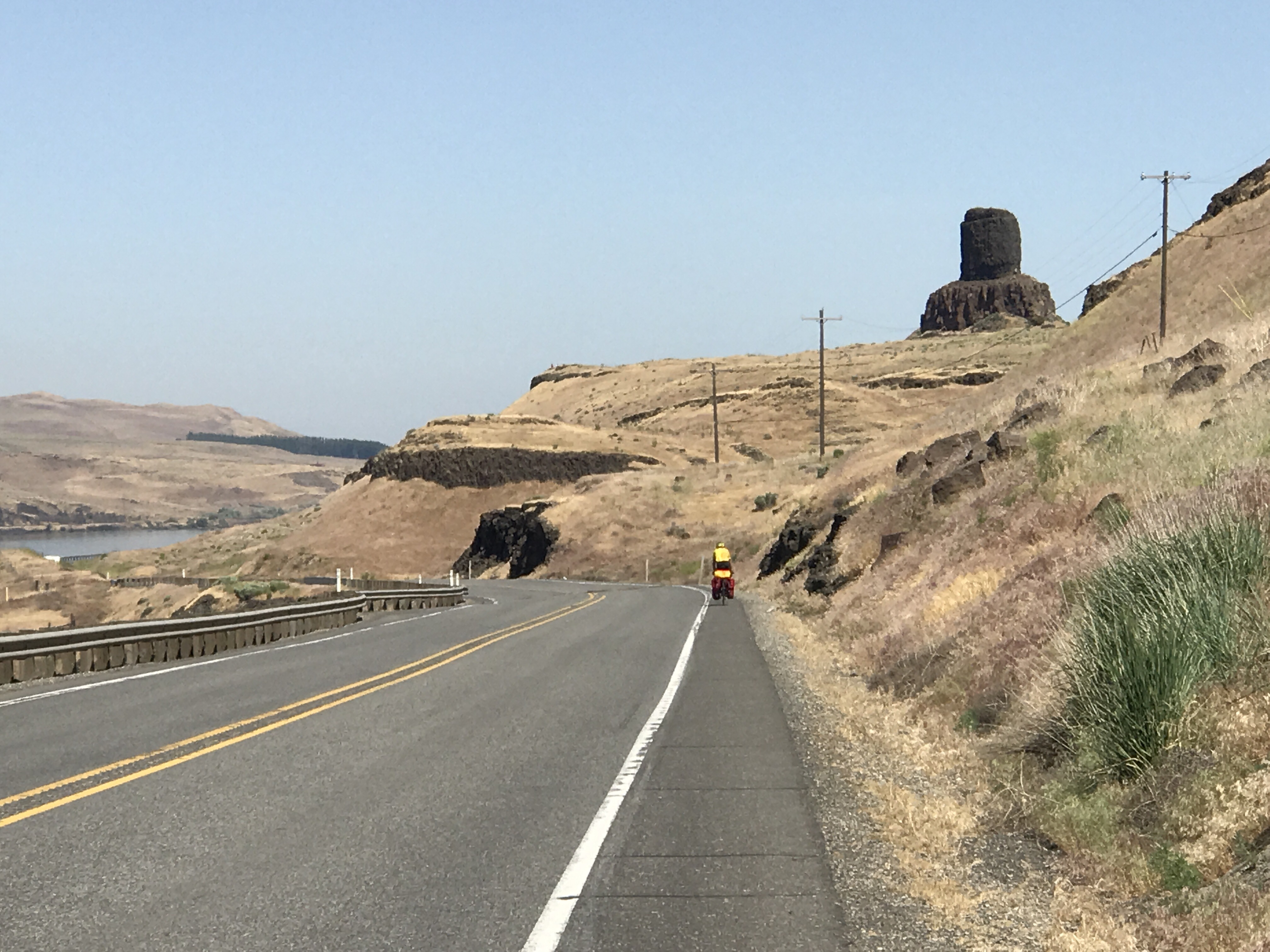
Around this point we said goodbye, Columbia, and turned up the valley of the Walla Walla River.
Now’s a good time to introduce our mascot, Meriwether. I have a history of finding dinosaurs during bike trips. I gave the last one to Lisa a few years ago, and before we left she presented it back to me, prepped for our journey. Meri lives on my handlebar. She is always upbeat.
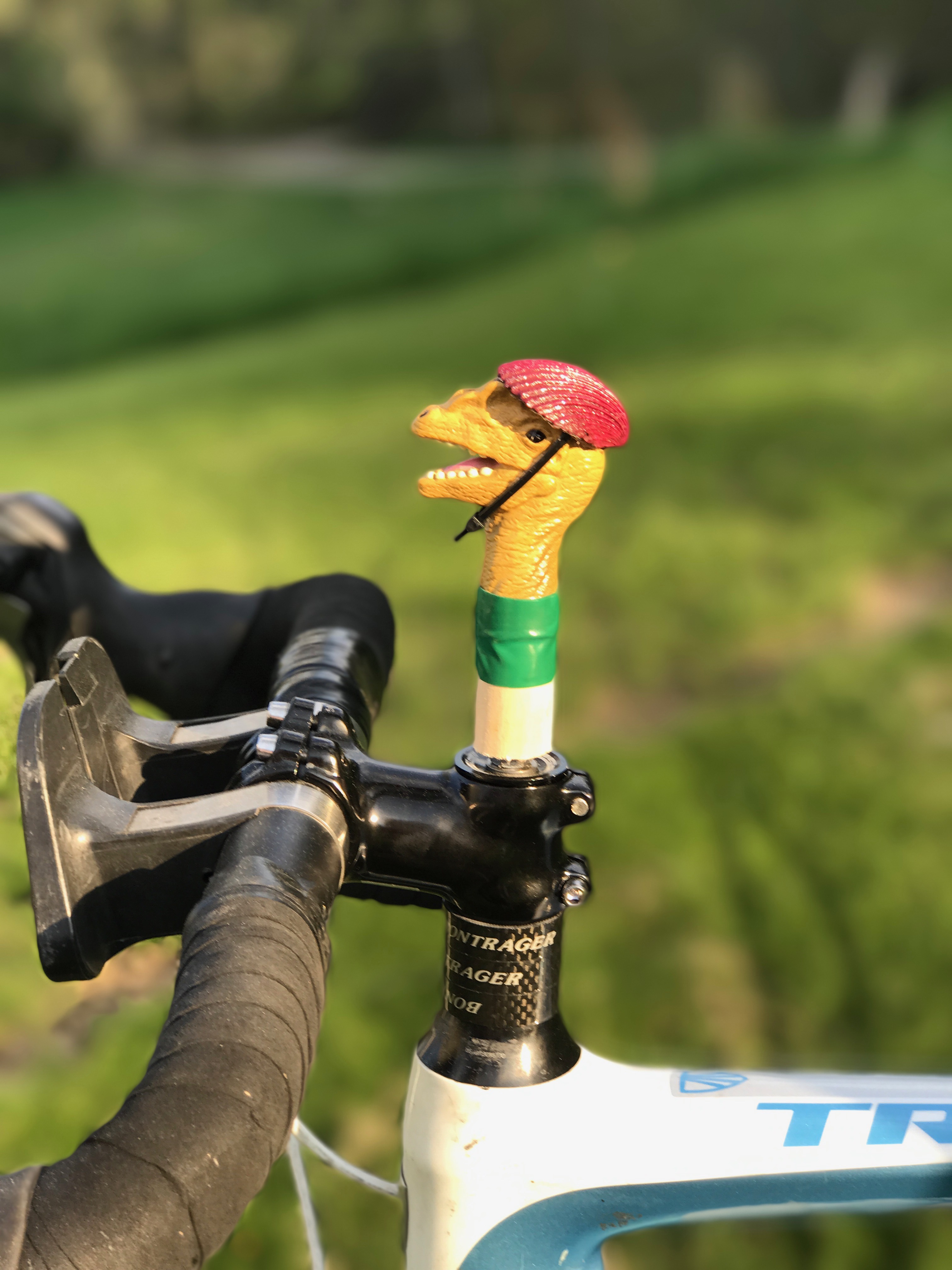
She cheered us up today immensely. My bike was making an ominous click with every pedal stroke. Mark adjusted the derailleur, fiddled with the stem and the pedals, and listened to my vague notions about dried-out bearings. He finally deduced that his extremely clever system of attaching Meri was the source of the problem. He took out the system and resorted to wire ties to affix her to my handlebar, and the clicking is now GONE. I had started thinking that Chris at Cyclemainea was right in hinting that my old bike isn’t up to this trip. He’s not right, yet.
Today we rode to Walla Walla. I’ll just write Walla Walla again as it’s so nice to have on the tongue. If you squint you can see the wind turbines all along this ridge.
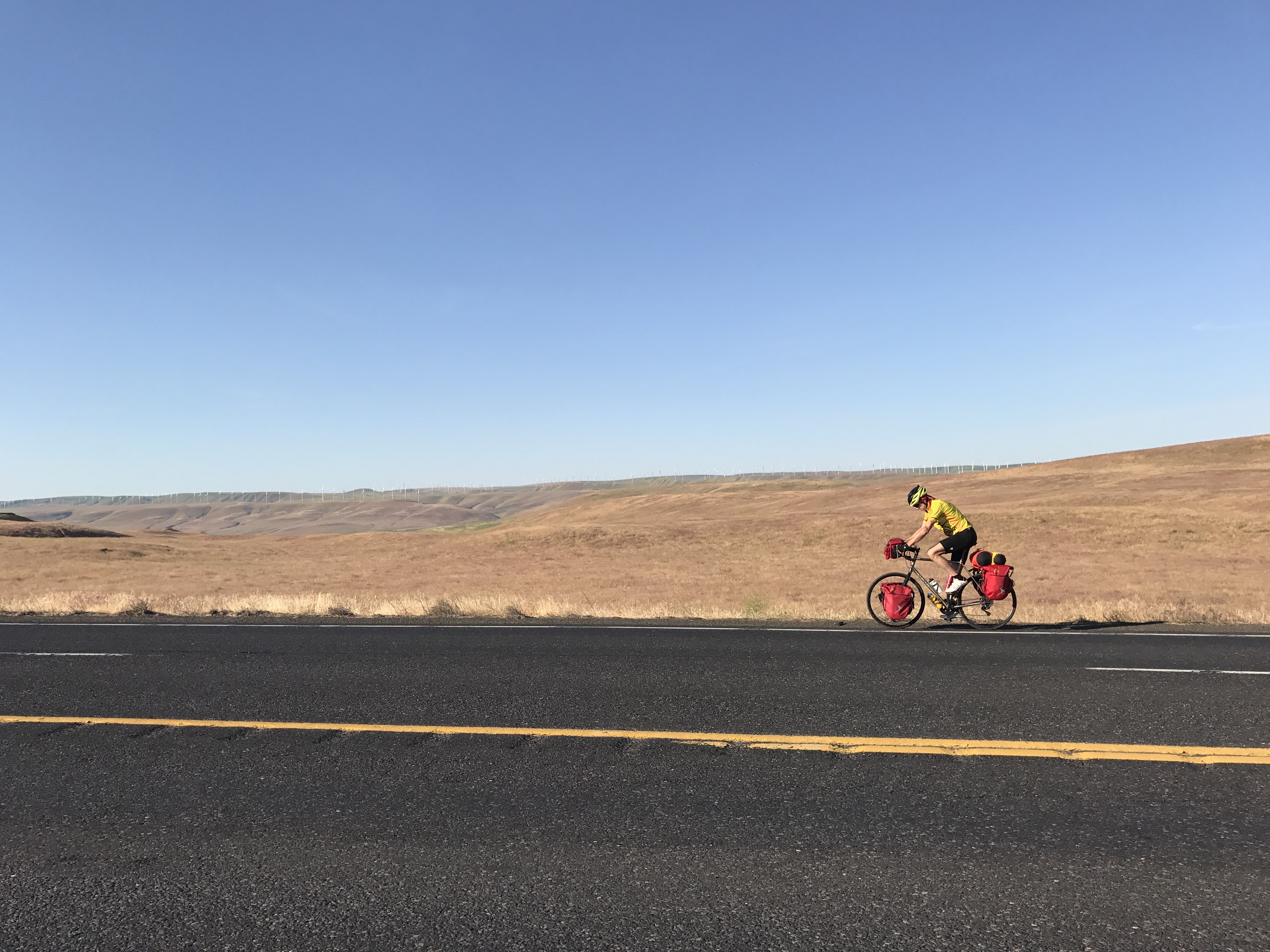
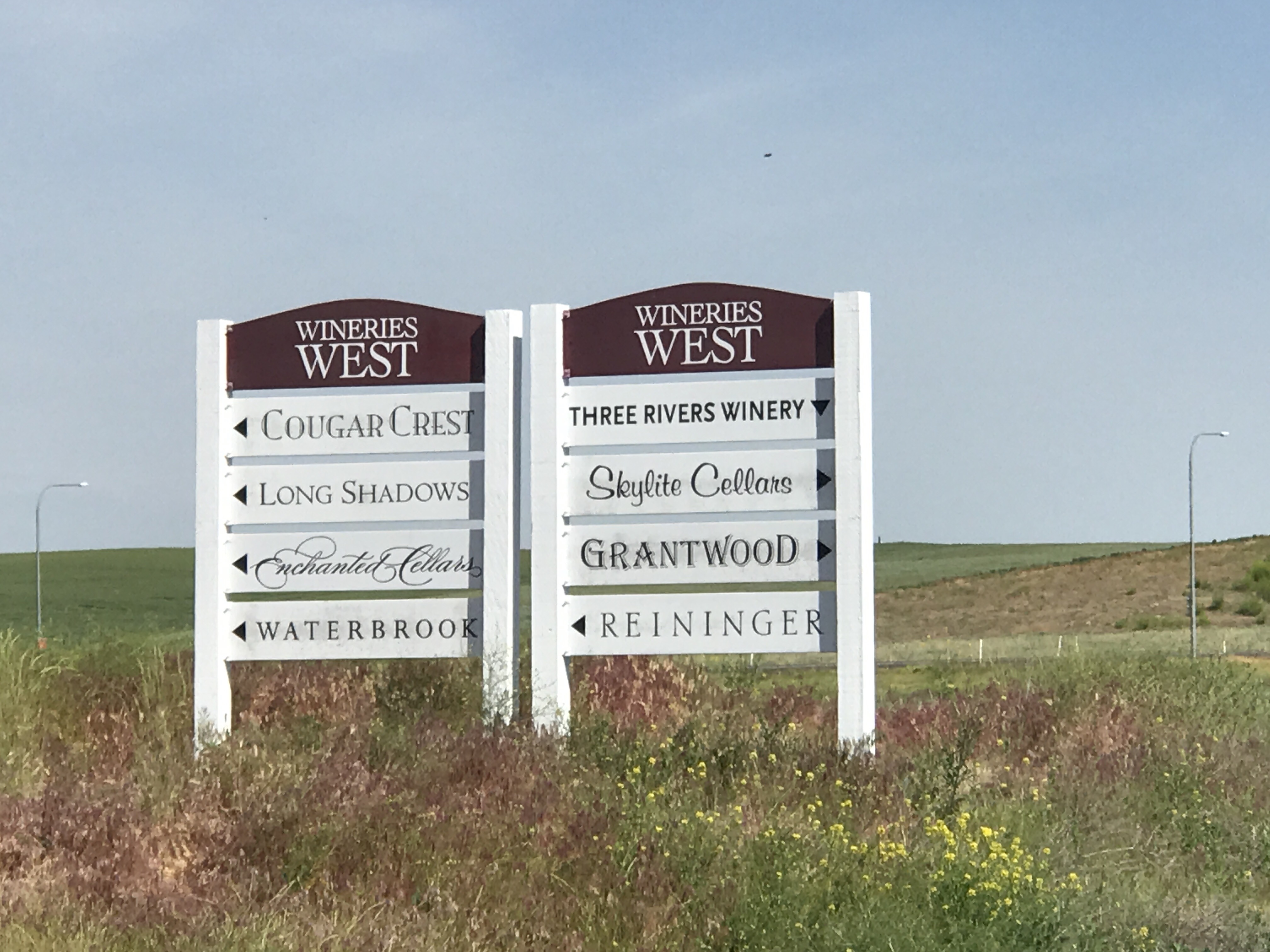
Look how dry it is. But with the miracle of irrigation, there’s lots of agriculture, particularly wineries.
We stopped at the Whitman Mission National Historic Site. The site driveway lies directly on top of the Oregon Trail. Here Marcus and Narcissa Whitman established a Protestant mission to the Cayuse Indians in 1836. The Whitmans and the Indians came into conflict, and the Indians killed nine of the settlers. This was the “massacre” that then brought the US to clear out the Indians here and establish Oregon Territory with accompanying infrastructure much more quickly than would have happened in the gradual development that had been unfolding. We had learned the complicated story through watching the Ken Burns documentary “The West” (highly recommended), so I was particularly interested in getting a sense of the place. The film portrays Narcissa Whitman as not really liking Indians, a fateful attitude. A National Park Service interpreter welcomed us and gave some background, and as I asked a few questions he revealed that he was a Cayuse Indian himself. He had a nuanced, well-read, and long-considered view of the Whitmans and white settlement. I was impressed that the Historic Site had recently rewritten its materials and made a new film to show more sides of the story. As we were leaving, our guide started a tour for some school children. While the kids were whispering about the tomahawks, the guide started them off before a drawing of the rye grass plain as it was in the 1800s. He said, “You kids live in a very agricultural area. If there’s just one thing you should learn today, it’s to see the land as it was.”
Now we are in Walla Walla the college town.
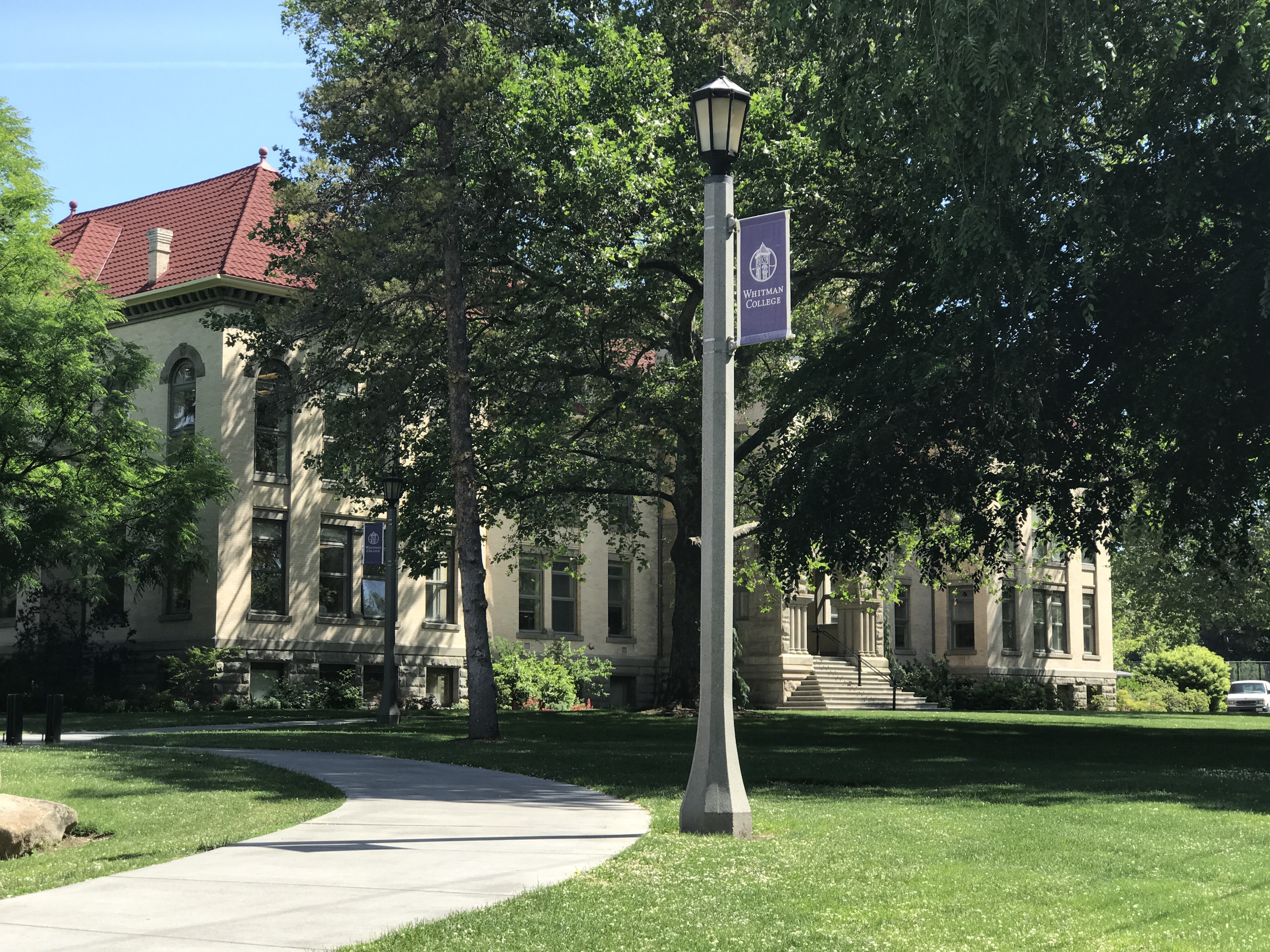
Our son Noah considered going to school here. At the Whitman Mission Site, I asked our guide if Whitman College had done some self-study about its heritage. Yes, he said, and just recently they changed the team name from the Whitman “Missionaries” to the Whitman “Blues,” for the color of the mountains beyond. Noah the Polar Bear could have been Noah the Missionary.
 Baked Potatoes
Nice post. Chris and I are enjoying and appreciating the commentary. You may recall our middle daughter Lisa went to Whitman so we have been to Walla Walla and drove several parts of your ride from Portland OR.
LikeLike
Thanks! Yes, I’ve been thinking about your being here.
LikeLike
Keep ’em coming. I am loving this. Interesting theory about your tolerance to heat, I bet you are right.
LikeLike
Maybe. Mark has a recording of a yoga routine for bikers. We just did a session of it, and he’s got me beat in those stretches. Ow.
LikeLike
Karen – We are enjoying your commentary – the photos looks very dry and warm, compared to what we have here in Maine. It seems you have settled into a good routine, but nothing is ever routine in a bike trip. Enjoy- we love hearing about your adventures!
LikeLike
Thanks, Cindy. Yes, we enjoy looking up the weather in Maine.
LikeLike